Local Service Information
Snoqualmie
A city on the Snoqualmie River near Snoqualmie Falls in the upper valley of east King County.
County: King County
ZIP Codes Served: 98065
Neighborhoods: Downtown, Snoqualmie Ridge
Nearby Communities: North Bend, Issaquah, Carnation
Common Property Types: Predominantly single-family homes, with some townhomes and multifamily housing; commercial property includes small retail, civic, and light commercial buildings.
Local Tree & Landscape Notes: Forested foothill setting with conifers such as Douglas fir, western hemlock, and western red cedar, plus bigleaf maple and alder. Slopes, wet soils, and larger trees are common considerations for access and rigging.
Permit Considerations: Permit requirements vary depending on tree size, species, protected areas, shoreline regulations, critical areas, and local municipal code. Always verify current requirements with the local jurisdiction before beginning work.
Climate: Marine west coast climate typical of the Puget Sound region: mild, wet winters and warm, relatively dry summers, with most rainfall from fall through spring. Occasional wind, snow, and ice events and seasonal soil saturation influence tree health and the timing of tree work.
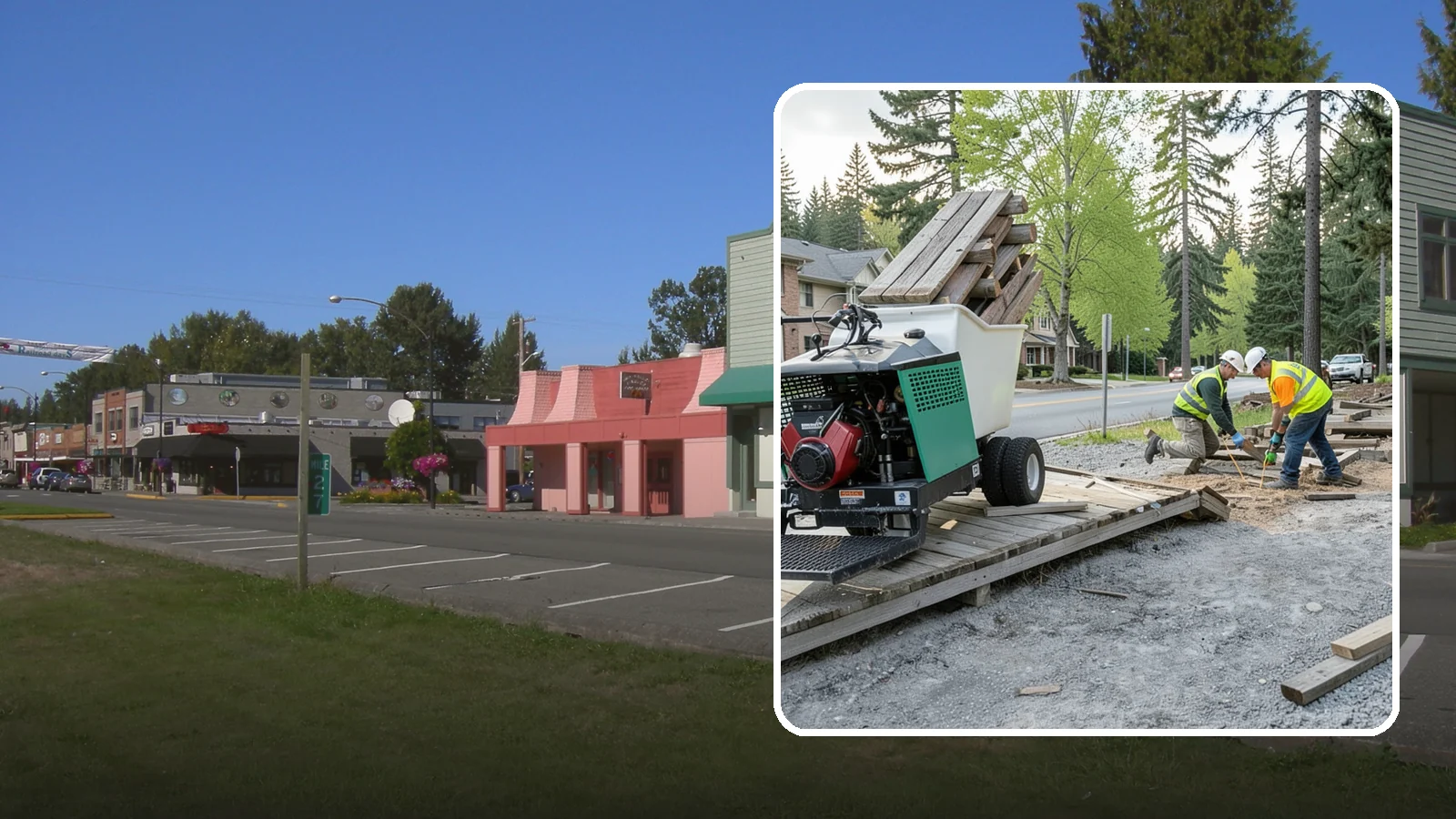
Snoqualmie combines the tourism draw of Snoqualmie Falls and the Northwest Railway Museum with the planned commercial and institutional grounds of Snoqualmie Ridge, giving King County’s upper valley a mix of high-visibility public sites and modern managed landscapes. Civic departments, master-planned community managers, and commercial owners here maintain streetscapes, park grounds, and business parcels that serve both residents and steady visitor traffic. Our municipal and commercial property-services work is scaled for this blend of heritage attractions and contemporary managed grounds.
Work in Snoqualmie spans the historic downtown near the Northwest Railway Museum, the falls-adjacent public frontage, and the planned commercial and institutional grounds of Snoqualmie Ridge. Crews coordinate with civic staff, community-association managers, and commercial owners whose King County sites demand polished, consistent turf, planting, and hardscape upkeep across both heritage and modern settings.
Site Conditions: Sites range from the visitor-heavy public frontage near Snoqualmie Falls and the downtown museum core to the graded, drainage-engineered landscapes of Snoqualmie Ridge. Cooler upper-valley conditions, riverside exposure, and managed stormwater systems on the Ridge create maintenance demands around erosion, sightlines, and durable, high-appearance grounds across public and commercial parcels.
Seasonal Considerations: Running slightly cooler than the open lowlands, Snoqualmie sees damp winters with occasional harder cold and mild, dry summers. Crews prioritize drainage, leaf cleanup, and storm-debris removal across downtown and Ridge grounds through the wet season, then shift to irrigation, turf, and planting care in summer to keep falls-adjacent frontage and planned-community landscapes presentable for steady visitor use.
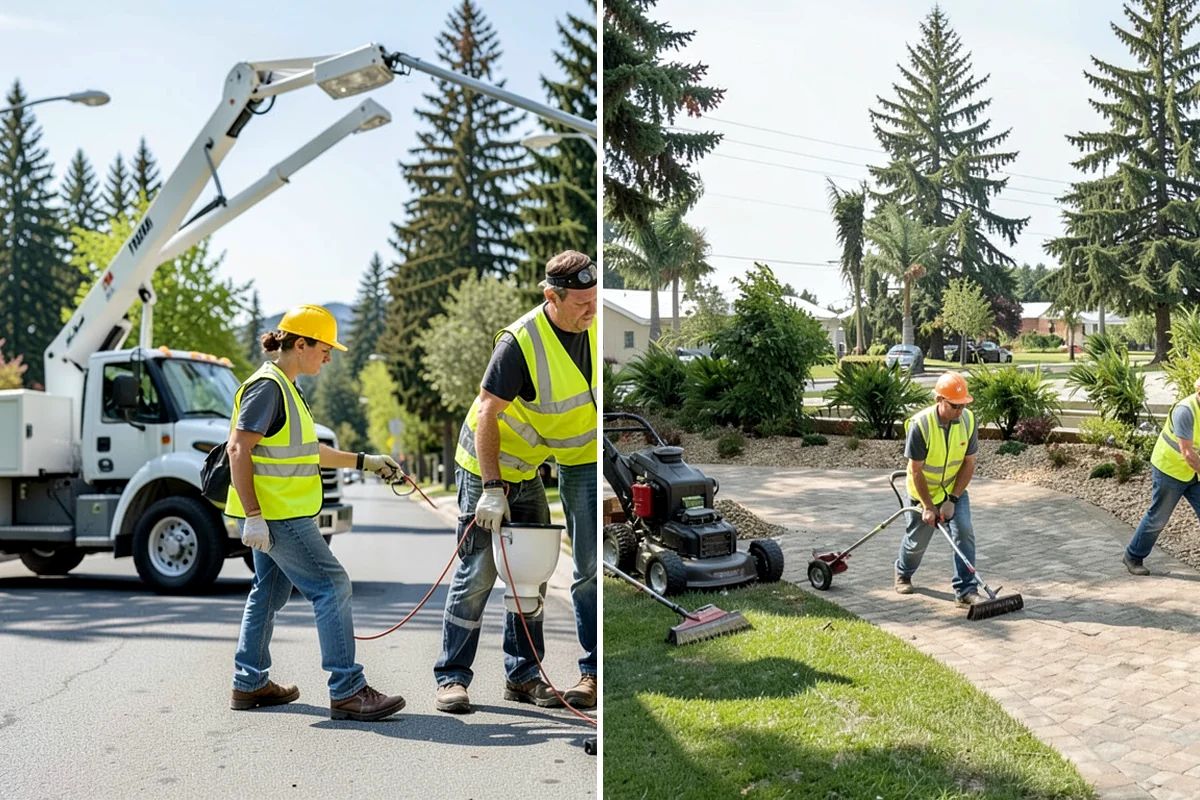
Common Project Types: Typical projects include streetscape and planting maintenance near the historic downtown and Northwest Railway Museum, turf and grounds care on Snoqualmie Ridge commercial and institutional parcels, falls-adjacent public frontage upkeep, drainage and stormwater-feature management on graded sites, pressure washing of hardscape, and litter cleanup across visitor-heavy public areas.
Property Styles: Snoqualmie pairs a compact historic downtown of small retail and civic buildings with the planned, higher-density commercial and residential landscapes of Snoqualmie Ridge. That contrast means maintenance shifts between heritage-streetscape care near the museum and falls and the crisp, master-planned grounds standards expected across the Ridge.
Local Materials & Plants: Ridge landscapes lean on structured, low-maintenance material like compact boxwood, karl foerster grass, and drift-planted rudbeckia with engineered mulch beds, while downtown and falls-adjacent grounds use native vine maple, sword fern, and red huckleberry suited to cooler, moist upper-valley conditions. Permeable pavers and bioretention plantings manage stormwater across graded Ridge parcels.
Planning Your Project: Planning for Snoqualmie coordinates heritage-downtown and falls-frontage access with the master-planned standards and stormwater systems of Snoqualmie Ridge, working with civic staff and community managers on staging. We schedule visitor-area work around peak periods, phase Ridge grounds care to hold appearance standards, and confirm scopes with responsible managers before crews mobilize.
Work with a municipal and commercial property-services team that can serve both Snoqualmie’s heritage attractions and its Snoqualmie Ridge grounds. Get in touch to shape a maintenance plan matched to the city’s public and commercial properties.