Local Service Information
Puyallup
A city in the Puyallup River valley known for its fairgrounds and agricultural heritage.
County: Pierce County
ZIP Codes Served: 98371, 98372, 98373, 98374, 98375
Neighborhoods: South Hill, Downtown, Riverside
Nearby Communities: Sumner, Tacoma, Edgewood, Fife
Common Property Types: Predominantly single-family homes with townhomes and some condominiums and multifamily housing; commercial property includes retail, office, and small mixed-use buildings.
Local Tree & Landscape Notes: Common regional trees include Douglas fir, western red cedar, western hemlock, bigleaf maple, and red alder, alongside many ornamental species. Wet soils and dense canopy are common considerations for access and scheduling.
Permit Considerations: Permit requirements vary depending on tree size, species, protected areas, shoreline regulations, critical areas, and local municipal code. Always verify current requirements with the local jurisdiction before beginning work.
Climate: Marine west coast climate typical of the Puget Sound region: mild, wet winters and warm, relatively dry summers, with most rainfall from fall through spring. Occasional wind, snow, and ice events and seasonal soil saturation influence tree health and the timing of tree work.
Home to the Washington State Fairgrounds, Puyallup carries some of Pierce County’s heaviest civic and commercial traffic, from South Hill retail to the riverside parks near downtown. Washington City Services works with the city, school district, and commercial property managers here on high-use athletic fields, event-adjacent grounds, and pavement programs that stand up to lowland weather and constant activity. Pioneer Park and the Puyallup River corridor anchor much of the public-space workload.
In Puyallup, service work is defined by volume, keeping fairgrounds-adjacent lots, South Hill commercial frontages, and downtown parks presentable and functional through spikes in event and shopping traffic. We build mowing, striping, and repair schedules around peak periods so heavily used surfaces stay serviceable year-round.
Site Conditions: Sites range from compacted, high-traffic lots and event grounds to river-valley soils near the Puyallup River that hold moisture. Constant use around the fairgrounds and Pioneer Park accelerates turf wear and pavement fatigue, while low downtown parcels manage seasonal runoff.
Seasonal Considerations: Lowland winter lows bring frost that stresses pavement, and steady rain loads drainage across the valley. The fair and event calendar drives late-summer and fall demand, spring pushes mowing and turf recovery, and summer offers the dependable window for resurfacing and striping high-traffic areas.
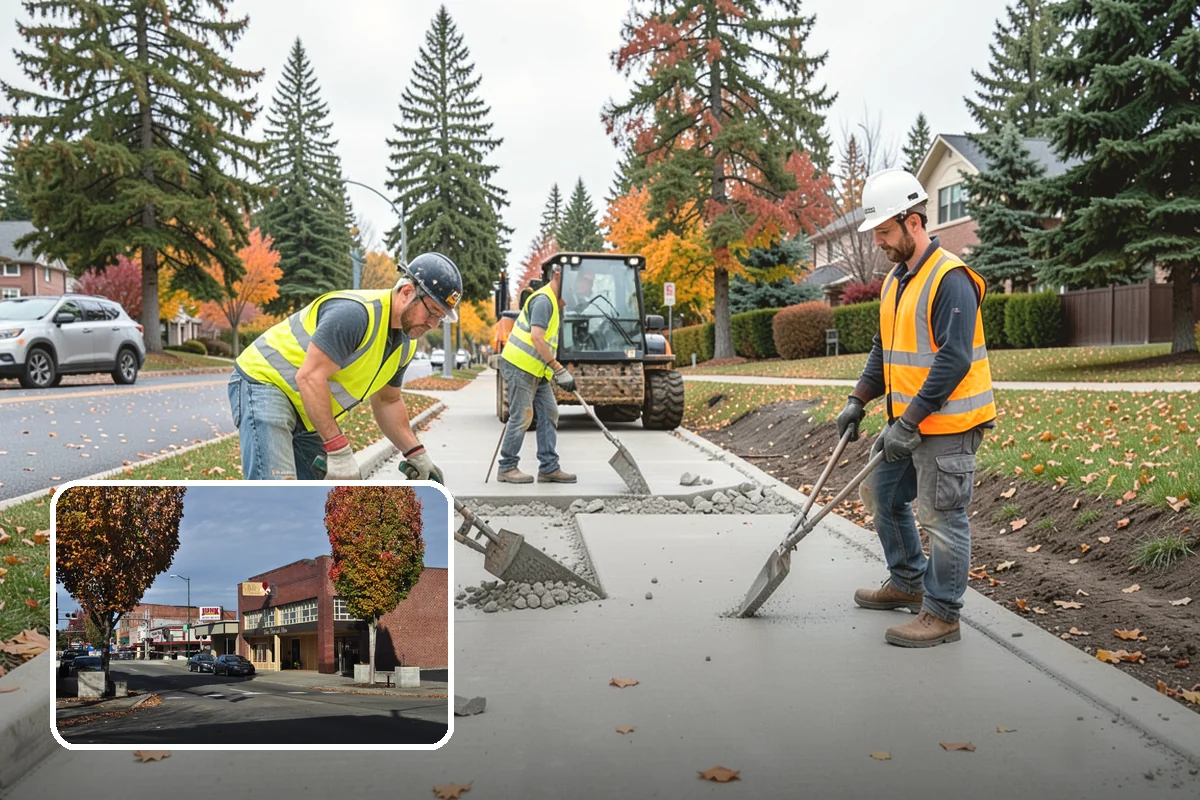
Common Project Types: Common projects include resurfacing and striping event and commercial parking, renovating worn athletic and event-lawn turf, repairing high-traffic sidewalks and curb ramps, clearing valley drainage, and pressure washing civic buildings and park structures between events.
Property Styles: Puyallup blends retail, office, and small mixed-use buildings with single-family homes, townhomes, and some condominiums, so grounds programs span busy commercial frontages, large event-adjacent grounds, and neighborhood parks that each carry different wear.
Local Materials & Plants: High-traffic turf here leans on tough Kentucky bluegrass and ryegrass blends that recover from event loads, with London plane street trees and daylily and coreopsis massed in medians for color and durability. Pavement work uses thermoplastic striping and structural concrete at high-wear entries over a compacted aggregate base.
Planning Your Project: Contracting is planned around the event calendar, sequencing heavy pavement and turf work into open windows and staging quick-turn repairs between gatherings. Scopes are defined with staff so crews time disruptive work away from peak public use.
Partner with Washington City Services to keep Puyallup’s high-traffic grounds, event lots, and pavements event-ready across the full year.