Local Service Information
Mount Vernon
The Skagit County seat, set in the Skagit River valley amid farmland.
County: Skagit County
ZIP Codes Served: 98273, 98274
Neighborhoods: Downtown, College Way, Little Mountain
Nearby Communities: Burlington, Sedro-Woolley, Anacortes, La Conner
Common Property Types: Predominantly single-family homes, with some townhomes and multifamily housing; commercial property includes small retail, civic, and light commercial buildings.
Local Tree & Landscape Notes: Common regional trees include Douglas fir, western red cedar, western hemlock, bigleaf maple, and red alder, alongside many ornamental species. Wet soils and dense canopy are common considerations for access and scheduling.
Permit Considerations: Permit requirements vary depending on tree size, species, protected areas, shoreline regulations, critical areas, and local municipal code. Always verify current requirements with the local jurisdiction before beginning work.
Climate: Marine west coast climate typical of the Puget Sound region: mild, wet winters and warm, relatively dry summers, with most rainfall from fall through spring. Occasional wind, snow, and ice events and seasonal soil saturation influence tree health and the timing of tree work.
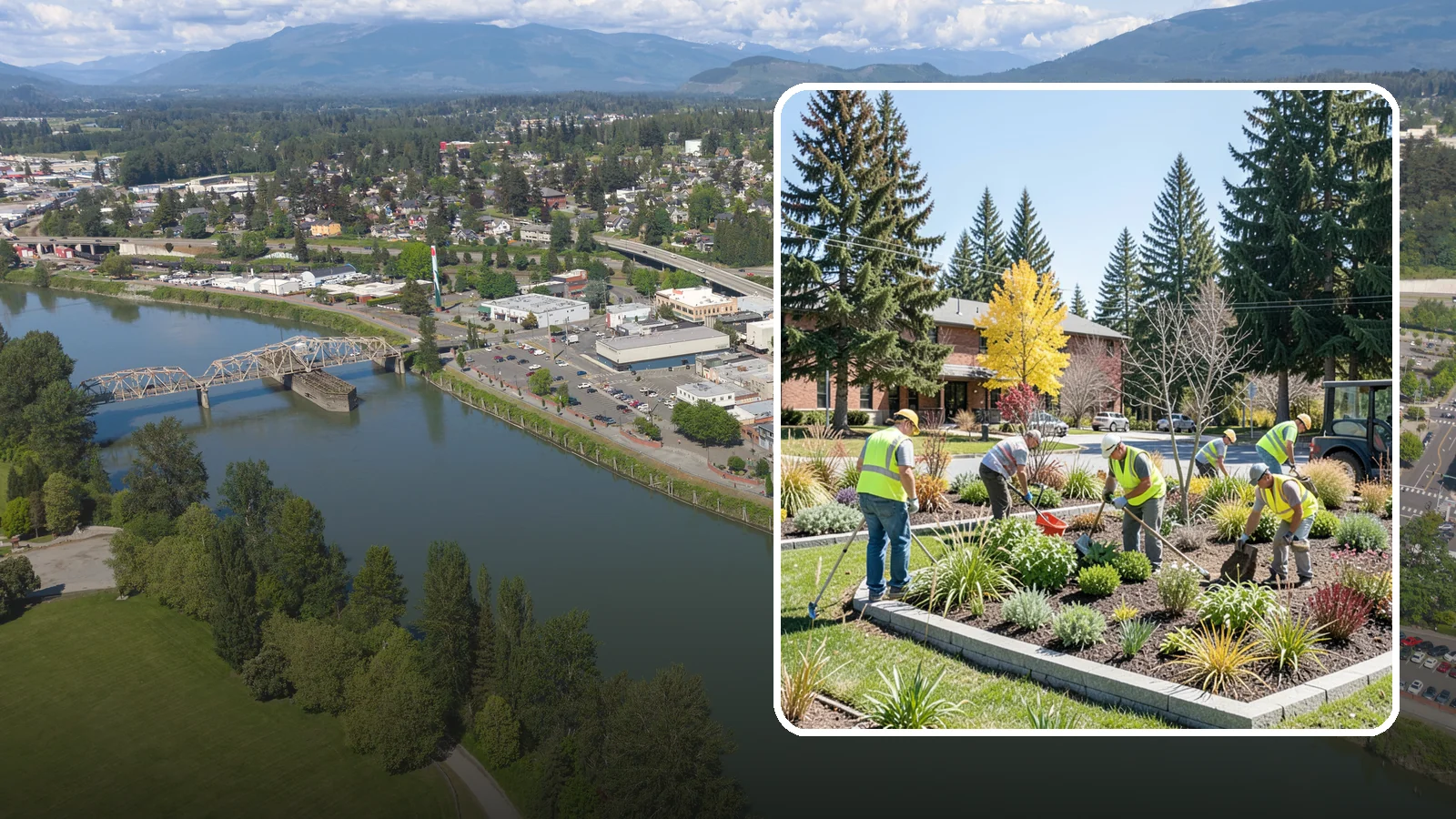
Mount Vernon is the Skagit County hub, built along the Skagit River waterfront with a downtown core, the College Way commercial corridor, Little Mountain Park, and the famous Skagit Valley tulip fields drawing visitors each spring. That mix of riverfront civic space, a busy commercial corridor, and seasonal tourism shapes a broad municipal grounds need across parks, streetscapes, and right-of-way. Our crews serve the city and its commercial property managers with maintenance built for a regional center that balances working-town infrastructure with high-visibility public spaces.
Work spans the College Way commercial corridor, downtown and riverfront frontages, and public grounds around Little Mountain Park, with route mowing, median and streetscape bed care, and litter patrol keyed to retail traffic and seasonal tourism. We coordinate cleanup and grooming so the waterfront, downtown, and corridor frontages stay presentable through the busy spring visitor season and the long active growing months for the city and local businesses.
Site Conditions: Public and commercial sites range from flat riverfront and downtown frontages prone to seasonal high water near the Skagit River to sloped park ground on Little Mountain and busy corridor medians. Crews manage riverine drainage, compaction on high-traffic frontages, and grade on the park’s slopes, all in a lowland setting that keeps turf growing vigorously and soils saturated after the valley’s frequent rain.
Seasonal Considerations: Spring is the peak visitor and growth season here, so tulip-season tourism drives early, intensive grooming of downtown, corridor, and park frontages just as the long lowland growing season ramps up. Summer keeps mowing and irrigation checks frequent, autumn brings heavy leaf load and drain clearing along the riverfront before high-water season, and winter shifts to pruning, storm-debris cleanup, and hardscape upkeep.
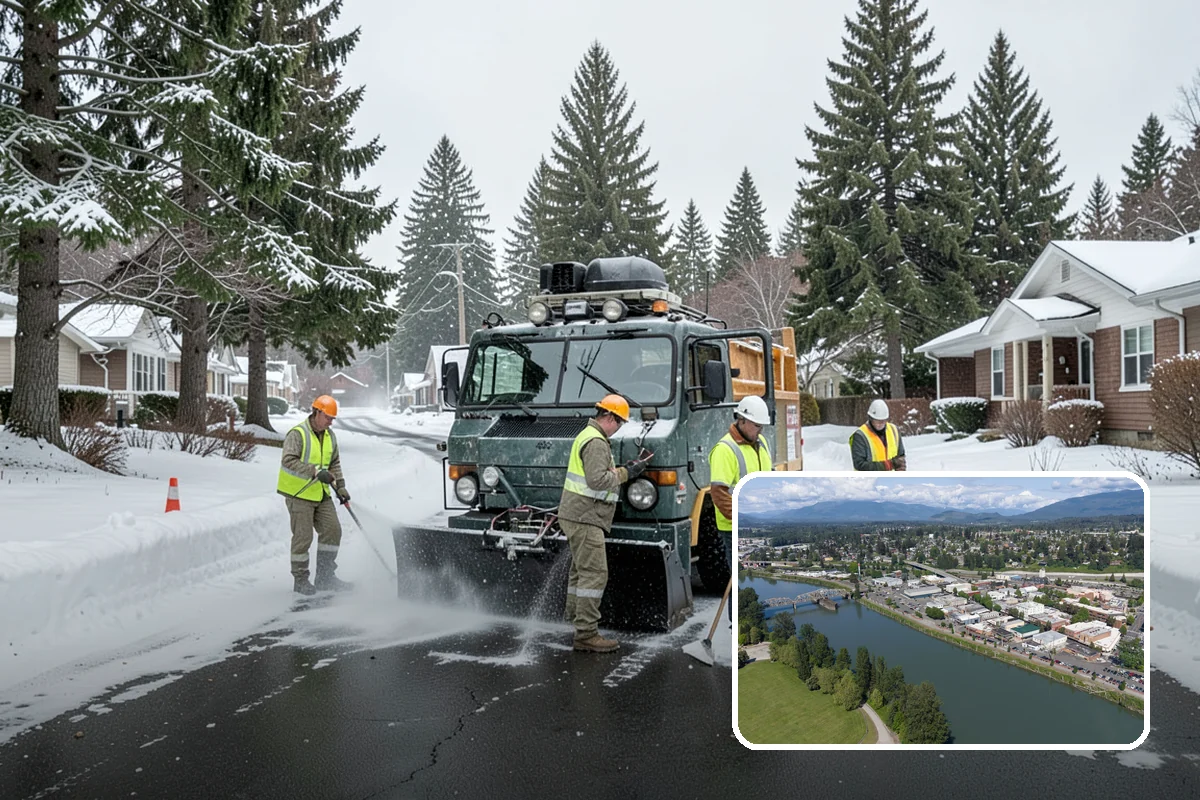
Common Project Types: Typical work includes corridor and median mowing, downtown and riverfront streetscape bed care, park mowing and turf renovation at Little Mountain, litter and debris patrol, seasonal leaf cleanup, ornamental bed and seasonal-color changes, and pressure washing of downtown and civic walkways. Tree pruning and drainage-inlet clearing along the riverfront round out the program.
Property Styles: Mount Vernon’s public realm blends a tidy, tourism-aware downtown with a practical commercial corridor: polished streetscape beds and seasonal color near the waterfront, and hard-wearing turf and simple massing along College Way. The finish reads clean and welcoming in visitor areas while staying durable and functional on the busier corridor frontages.
Local Materials & Plants: Downtown and waterfront beds lean on seasonal color and structure: tulip and daffodil bulb displays, karl-foerster grass, and compact spirea reflecting the valley’s flower-growing identity. Corridor medians use tough rye-fescue turf and bark-mulch topdressing over drought-tolerant shrubs, while riverfront buffers rely on native willow, red-osier dogwood, and rush suited to the wet valley soils.
Planning Your Project: We build a route-based calendar that front-loads grooming ahead of the spring tulip season, keeps corridor and park mowing on a steady rotation through the long growing season, and adds fall cleanup along the riverfront. Scoping is by measured turf, bed, and median area, with access sequenced around corridor traffic and visitor peaks and pruning, bulb changes, and hardscape washing staged across the year.
Present Mount Vernon’s waterfront, downtown, and College Way corridor at their best through the tulip season and beyond; reach out to scope a municipal or commercial grounds program suited to a regional hub.