Local Service Information
Monroe
A city in the Skykomish valley of east Snohomish County at the junction of US-2 and SR-522.
County: Snohomish County
ZIP Codes Served: 98272
Neighborhoods: Downtown Monroe (historic core), Fryelands, and the northern hill neighborhoods
Nearby Communities: Snohomish, Sultan, Duvall
Common Property Types: Predominantly single-family homes, with some townhomes and multifamily housing; commercial property includes small retail, civic, and light commercial buildings.
Local Tree & Landscape Notes: Common regional trees include Douglas fir, western red cedar, western hemlock, bigleaf maple, and red alder, alongside many ornamental species. Wet soils and dense canopy are common considerations for access and scheduling.
Permit Considerations: Permit requirements vary depending on tree size, species, protected areas, shoreline regulations, critical areas, and local municipal code. Always verify current requirements with the local jurisdiction before beginning work.
Climate: Marine west coast climate typical of the Puget Sound region: mild, wet winters and warm, relatively dry summers, with most rainfall from fall through spring. Occasional wind, snow, and ice events and seasonal soil saturation influence tree health and the timing of tree work.
Monroe anchors the Snohomish County countryside with a historic downtown core, the Fryelands and northern hill neighborhoods, and major public draws in the Evergreen State Fairgrounds and Lake Tye Park. Those event and recreation assets give the city an unusually large public-grounds footprint for its size, from fair-season traffic to year-round park use, alongside downtown commercial frontages. Our crews support municipal parks, fairgrounds-adjacent grounds, and right-of-way with maintenance geared to a jurisdiction that hosts large public gatherings and manages substantial open space.
Service centers on public parks and event grounds, including the areas around Lake Tye Park and the Evergreen State Fairgrounds, plus downtown streetscape and right-of-way maintenance. We coordinate athletic and park mowing, event-cycle cleanup, and litter patrol around peak gatherings, sequencing work so grounds are groomed ahead of programmed use and quickly reset afterward for the city and commercial property managers.
Site Conditions: Public sites range from open park and event lawns that take heavy foot and vehicle traffic to downtown frontages and low-lying ground near Lake Tye, where crews manage compaction, turf recovery, and drainage across broad flat parcels. The lowland setting keeps turf growing hard through the season and leaves event fields soft and slow to recover after wet weather and large gatherings.
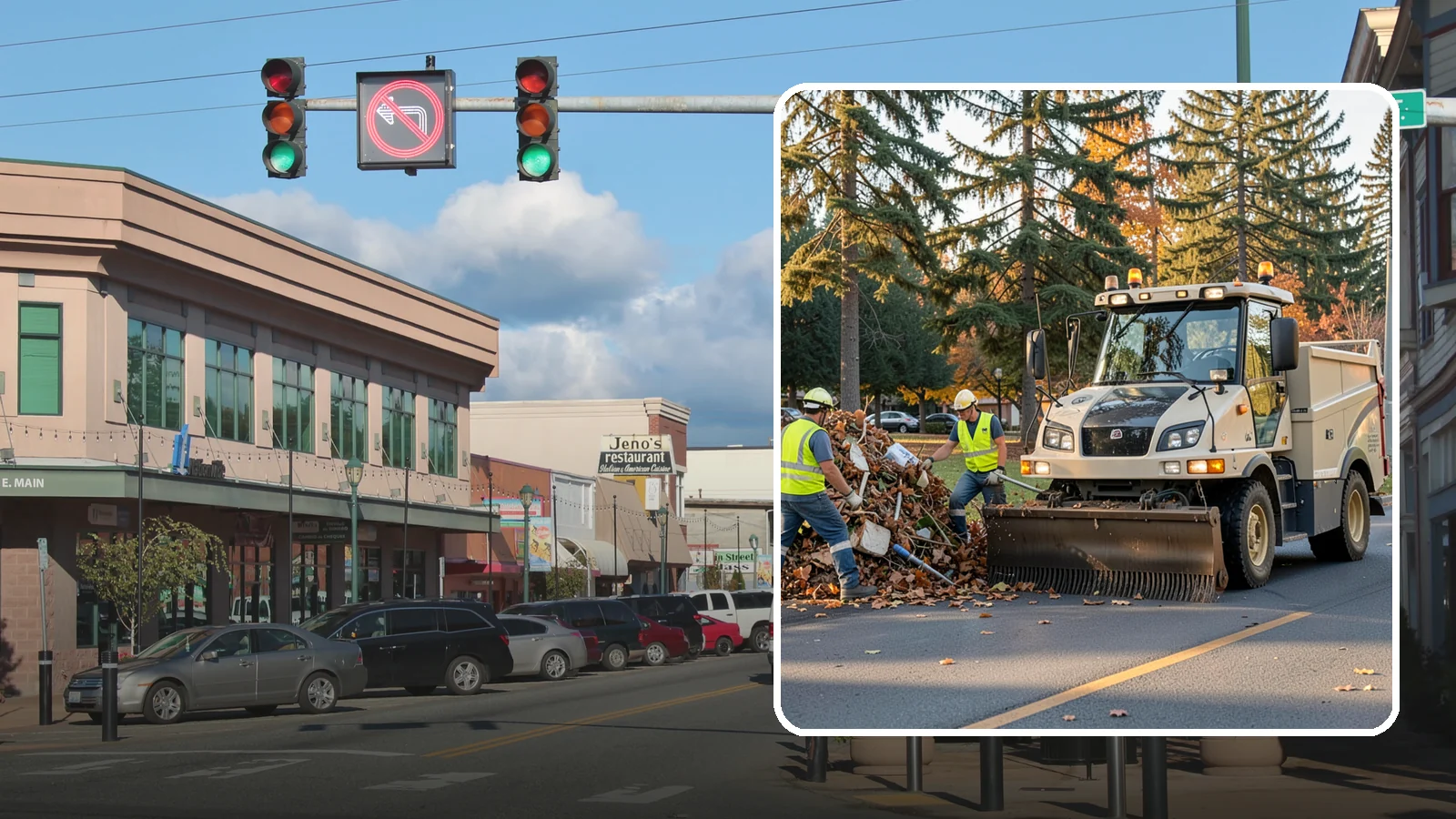
Seasonal Considerations: The long Puget Sound lowland growing season keeps park and event-field mowing frequent from spring through fall, with the summer fair and recreation calendar driving the busiest grooming and cleanup cycles. Autumn leaf load and post-event debris demand repeated cleanup, and drain clearing matters before winter rain on the low-lying grounds. Winter turns to field renovation planning, pruning, and storm-debris work.
Common Project Types: Recurring engagements include park and event-field mowing, turf aeration and overseeding to recover heavily used grounds, litter and post-event debris patrol, ornamental bed care downtown, seasonal leaf cleanup, pressure washing of civic walks and plazas, and drainage-inlet clearing. Tree-pruning cycles across parks and streetscapes are part of the standing program.
Property Styles: Monroe’s public grounds prioritize durability and open sightlines for events: broad, hard-wearing turf, simple perimeter plantings, and clean downtown frontages built to absorb crowds and heavy use. The finish is practical and resilient rather than ornamental, favoring turf and shrub massing that recovers quickly between gatherings.
Local Materials & Plants: Event-grounds turf leans on tough perennial-rye and fescue blends built for foot traffic, with perimeter plantings of Pacific ninebark, snowberry, and vine maple framing the fairgrounds and Lake Tye edges. Downtown beds use bark-mulch topdressing over hardy shrubs and grasses, while low-lying buffers rely on moisture-tolerant native dogwood and rush suited to the flat, wet ground.
Planning Your Project: Planning here revolves around the event and recreation calendar: we schedule intensive grooming and cleanup around major gatherings, keep park and field mowing on a steady rotation through the long season, and time aeration and overseeding for recovery windows. Scoping is by measured turf and grounds area, with access coordinated around programmed events and staged pruning, leaf, and hardscape work.
Keep Monroe’s parks, event grounds, and downtown frontages event-ready season after season; connect with us to scope a maintenance program tuned to your public spaces or commercial property.