Local Service Information
Lake Forest Park
A heavily wooded residential city at the north end of Lake Washington.
County: King County
ZIP Codes Served: 98155
Neighborhoods: Sheridan Beach, Brookside, and the Town Center area
Nearby Communities: Shoreline, Kenmore, Seattle
Common Property Types: Predominantly established single-family residential properties, many on larger landscaped lots; commercial development is very limited.
Local Tree & Landscape Notes: Common regional trees include Douglas fir, western red cedar, western hemlock, bigleaf maple, and red alder, alongside many ornamental species. Wet soils and dense canopy are common considerations for access and scheduling.
Permit Considerations: Permit requirements vary depending on tree size, species, protected areas, shoreline regulations, critical areas, and local municipal code. Always verify current requirements with the local jurisdiction before beginning work.
Climate: Marine west coast climate typical of the Puget Sound region: mild, wet winters and warm, relatively dry summers, with most rainfall from fall through spring. Occasional wind, snow, and ice events and seasonal soil saturation influence tree health and the timing of tree work.
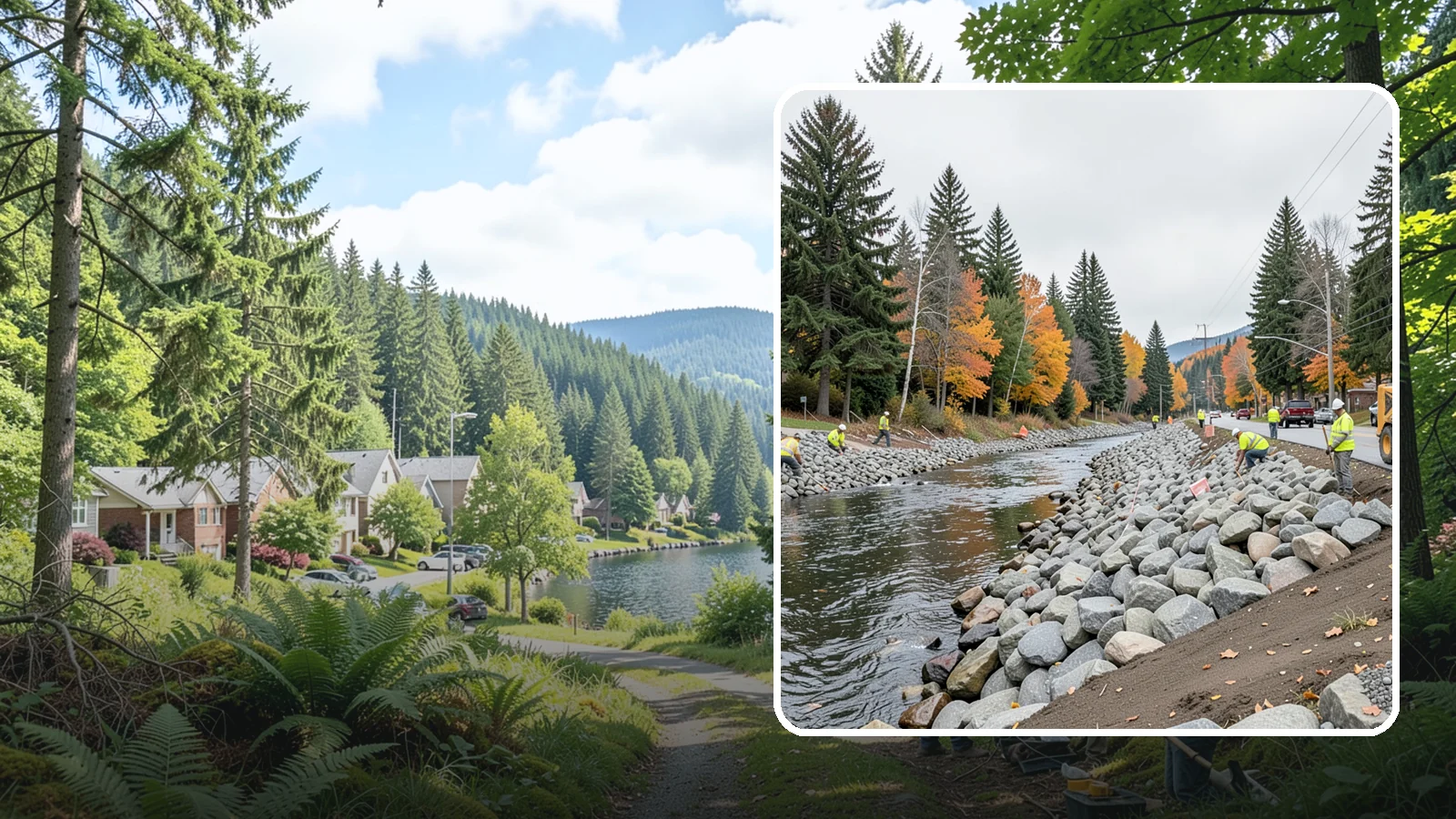
Lake Forest Park sits at the north end of Lake Washington in King County, a heavily wooded residential city where the Lake Forest Park Town Center and the Burke-Gilman Trail serve as its main public gathering points. With commercial development concentrated and limited, the city’s public-grounds needs revolve around trail corridors, the Town Center, and the mature tree canopy that shades neighborhoods like Sheridan Beach and Brookside.
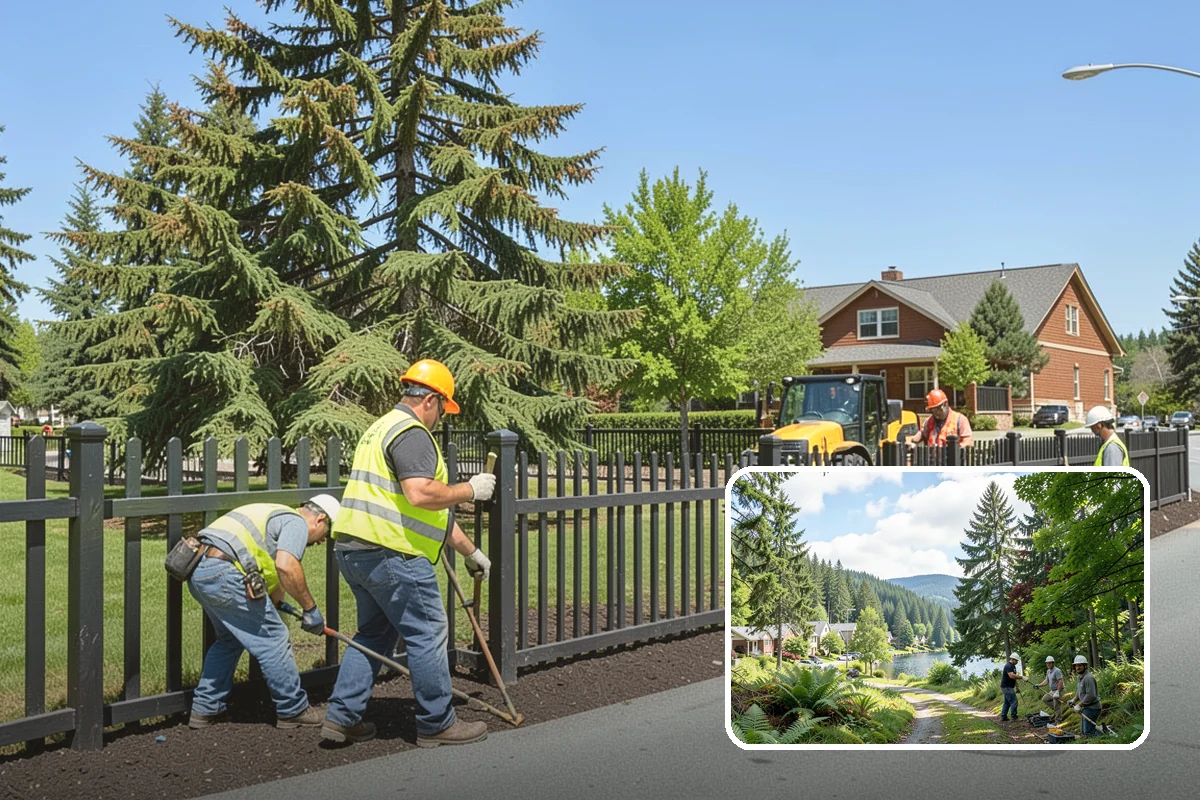
Our work supports the Burke-Gilman Trail corridor, the Lake Forest Park Town Center grounds, and the civic frontages that tie the community together, with an emphasis on canopy management and trail-edge upkeep across the Sheridan Beach and Brookside areas.
Site Conditions: A dense second-growth tree canopy defines public grounds here, dropping leaf litter and limbs onto the Burke-Gilman Trail and Town Center walkways, while shaded, moisture-holding soils on gentle slopes encourage moss and keep trail surfaces damp much of the year.
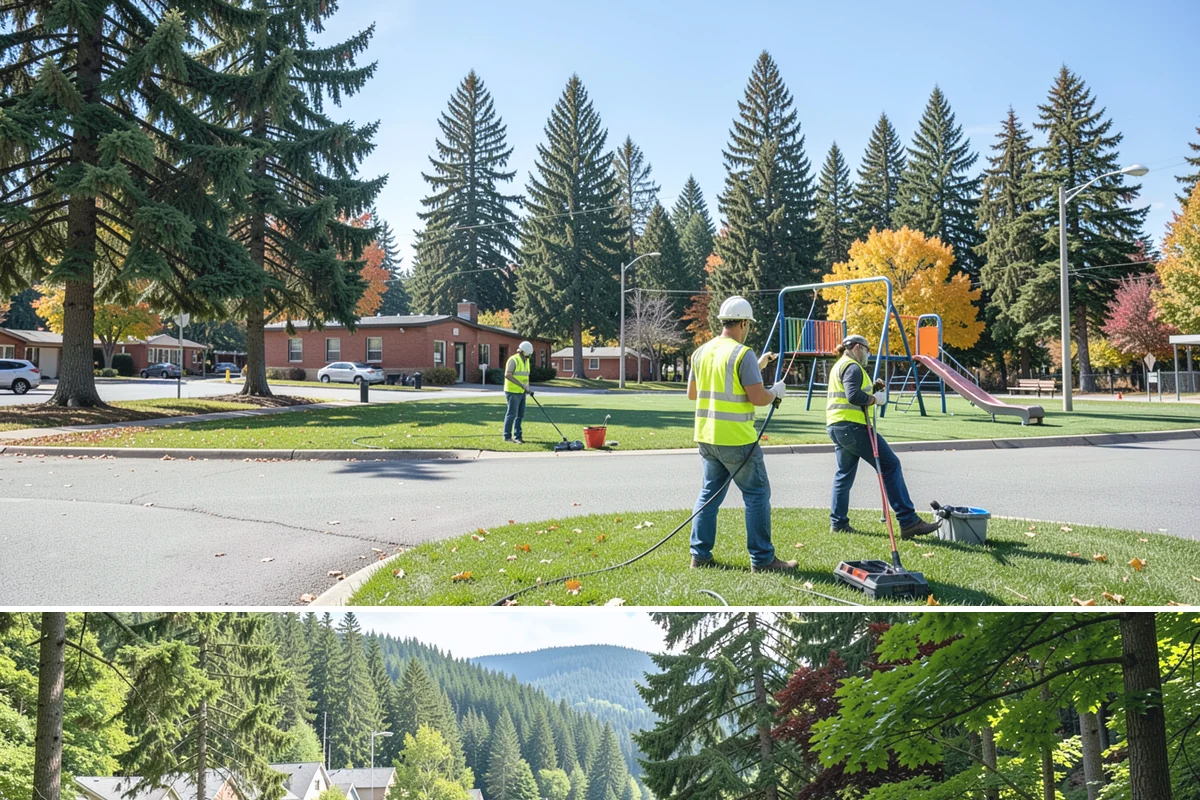
Seasonal Considerations: Fall is the demanding season, as heavy leaf and needle drop from the canopy loads gutters, trail edges, and parking areas around the Town Center. Winters stay wet and mild with rare snow, shifting effort to moss control and storm-debris clearing, while summer brings trail-corridor mowing and pruning.
Common Project Types: Frequent work includes trail-corridor vegetation management along the Burke-Gilman, tree and canopy pruning, leaf and storm-debris removal, Town Center grounds upkeep, and drainage clearing where shaded slopes shed water onto public paths and civic parking.
Property Styles: The city reads as a forested residential enclave with a single commercial anchor at the Town Center, so public grounds work prioritizes wooded trail edges, canopy health, and modest civic landscaping over large commercial plazas or open athletic turf.
Local Materials & Plants: Understory plantings lean on shade-loving natives like salal, sword fern, and vine maple that thrive beneath the canopy, with wood-chip trail borders and bark mulch suited to the damp soils. Permeable surfacing and root-friendly edging protect the mature trees along the corridor.
Planning Your Project: We plan Lake Forest Park work around canopy cycles and trail use, scheduling pruning and leaf operations before storm season and coordinating with the city to keep the Burke-Gilman corridor and Town Center access open while crews stage in tight, tree-lined settings.
Protect Lake Forest Park’s tree-lined trails and Town Center grounds with a maintenance team that respects its wooded character, and connect with us to plan seasonal care for your public or commercial property.