Local Service Information
Auburn
A city in the Green River valley of south King County, extending slightly into Pierce County.
County: King County (with a small portion in Pierce County)
ZIP Codes Served: 98001, 98002, 98092
Neighborhoods: Lea Hill, Lakeland Hills, West Hill, Downtown
Nearby Communities: Kent, Federal Way, Pacific, Algona
Common Property Types: Predominantly single-family homes with townhomes and some condominiums and multifamily housing; commercial property includes retail, office, and small mixed-use buildings.
Local Tree & Landscape Notes: Common regional trees include Douglas fir, western red cedar, western hemlock, bigleaf maple, and red alder, alongside many ornamental species. Wet soils and dense canopy are common considerations for access and scheduling.
Permit Considerations: Permit requirements vary depending on tree size, species, protected areas, shoreline regulations, critical areas, and local municipal code. Always verify current requirements with the local jurisdiction before beginning work.
Climate: Marine west coast climate typical of the Puget Sound region: mild, wet winters and warm, relatively dry summers, with most rainfall from fall through spring. Occasional wind, snow, and ice events and seasonal soil saturation influence tree health and the timing of tree work.
Auburn is one of the larger municipal centers in the Green River valley, straddling King and a small slice of Pierce County, with substantial parks like Game Farm Park, an active downtown, and hillside neighborhoods from Lea Hill to Lakeland Hills. Its scale means extensive public grounds, athletic complexes, civic facilities, and busy commercial corridors all require consistent maintenance. Between valley parkland, the White River corridor, and mixed-use downtown blocks, Auburn’s public and commercial property portfolio keeps grounds, paving, and facility upkeep in near-constant motion.
Services in Auburn are coordinated through municipal parks and public-works contracts, a sizable school district, and commercial property managers across downtown and the valley’s retail and office parks. Crews handle athletic-field complexes, civic-facility grounds, HOA commons in the hill neighborhoods, and right-of-way corridors, scheduling routine rounds to keep this large public inventory presentable.
Site Conditions: Set in the Puget Sound lowlands and the Green River valley, Auburn’s public assets, from sports fields at Game Farm Park to civic grounds, medians, and commercial lots, face valley damp, seasonal flooding pressure near the White and Green Rivers, and persistent winter wet that stresses turf and stains hardscape. Well-built drainage and hard-wearing surfaces are essential across these sites.
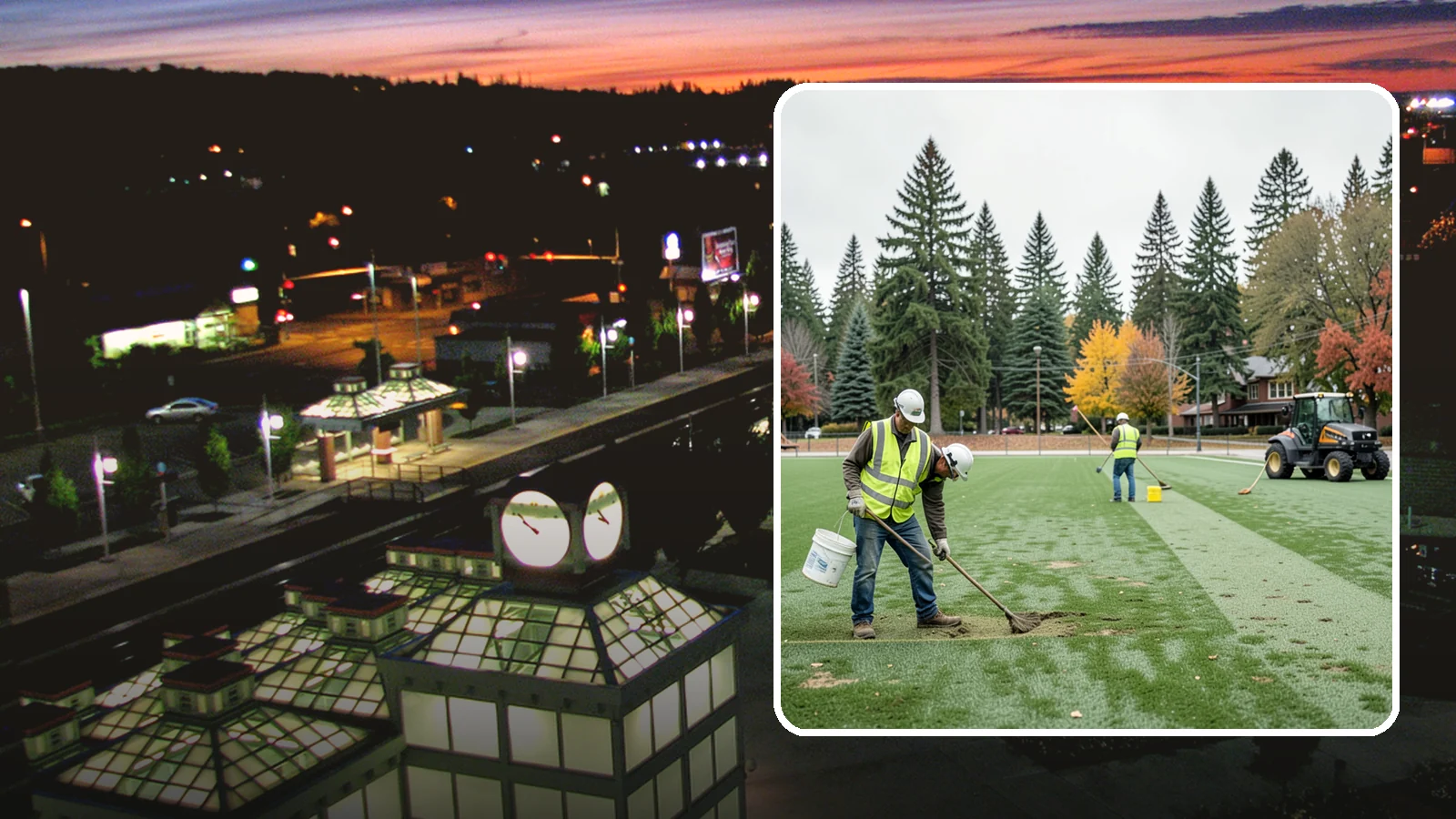
Seasonal Considerations: Spring drives athletic-field renovation, aeration, and grounds prep ahead of a busy recreation season. Summer keeps mowing, irrigation, and heavy park and sports-field use at peak. Fall centers on large-scale leaf removal and clearing valley drainage before high water, and winter shifts to storm response, flood-aware drainage checks, and keeping civic walkways and lots safe through wet weather.
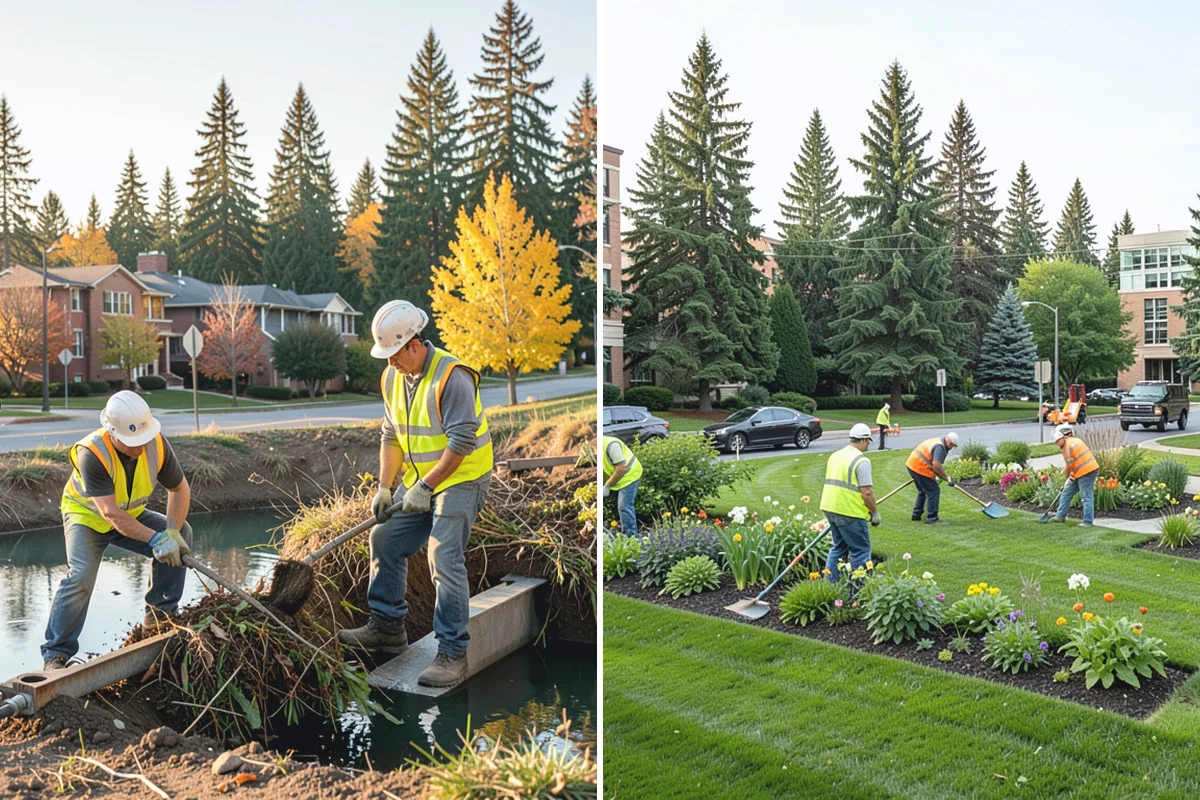
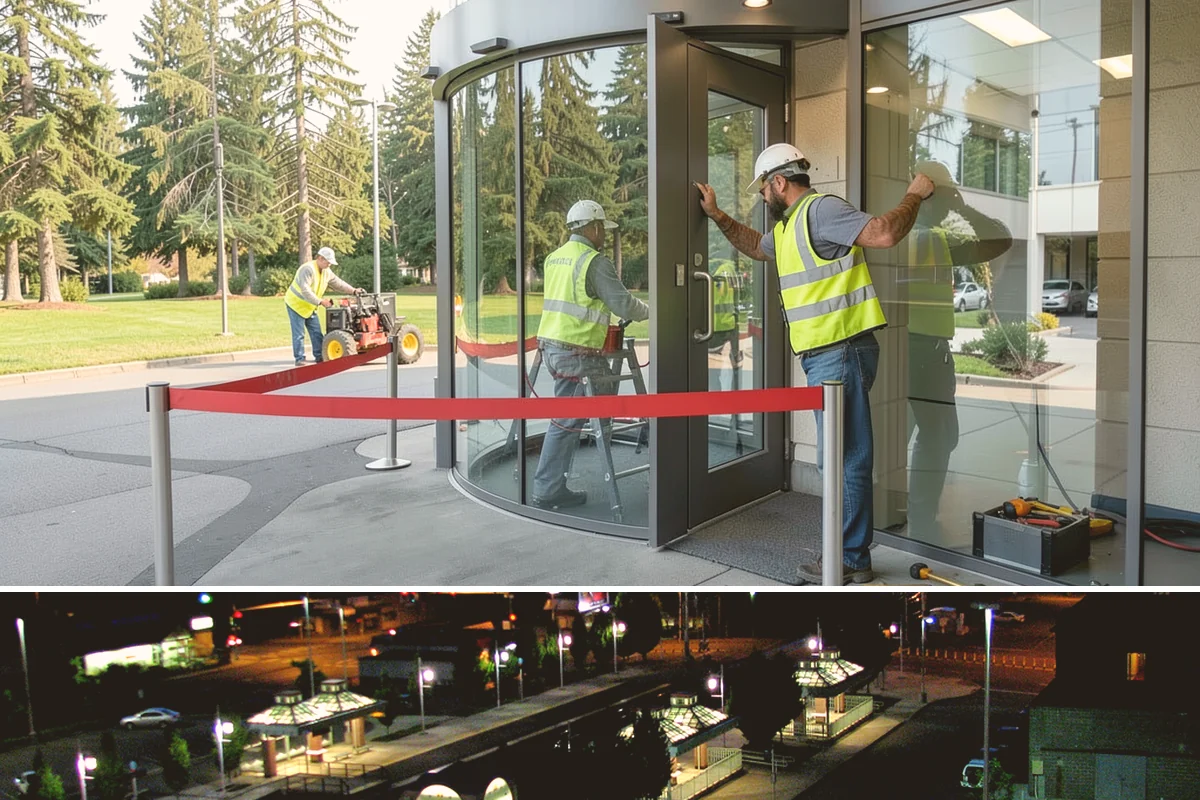
Common Project Types: Typical work includes athletic-field maintenance and renovation, grounds care at Game Farm Park and civic sites, asphalt and concrete repair across downtown and valley commercial lots, drainage and stormwater upkeep near the rivers, median and right-of-way vegetation control, pressure washing of commercial and civic frontages, and tree work throughout public parks.
Property Styles: Auburn’s mix spans large public parks and sports complexes, civic and mixed-use downtown buildings, valley retail and office parks, and residential HOA commons across Lea Hill, Lakeland Hills, and West Hill. That breadth calls for maintenance programs scaled to both high-use athletic grounds and busy commercial properties.
Local Materials & Plants: Given the sports-field demand, hard-wearing turf blends and sand-based rootzones suit athletic complexes, with compacted aggregate and repair-grade asphalt and concrete for lots and paths. Valley medians and civic beds do well with flood-tolerant natives like Pacific willow, red-osier dogwood, snowberry, and rushes that handle Green River valley saturation with minimal care.
Planning Your Project: Because Auburn’s inventory is large, planning generally leans on a structured seasonal calendar, with field renovation and grounds rounds through the growing season, paving and drainage during drier windows, and flood-aware scheduling near the rivers. Coordinating with the city, school district, and commercial managers keeps this extensive portfolio maintained without conflict.
Auburn’s public-works and parks teams, school facilities staff, and commercial property managers can contact us to detail their athletic fields, civic grounds, and paved areas and request a maintenance plan sized to a busy valley city.